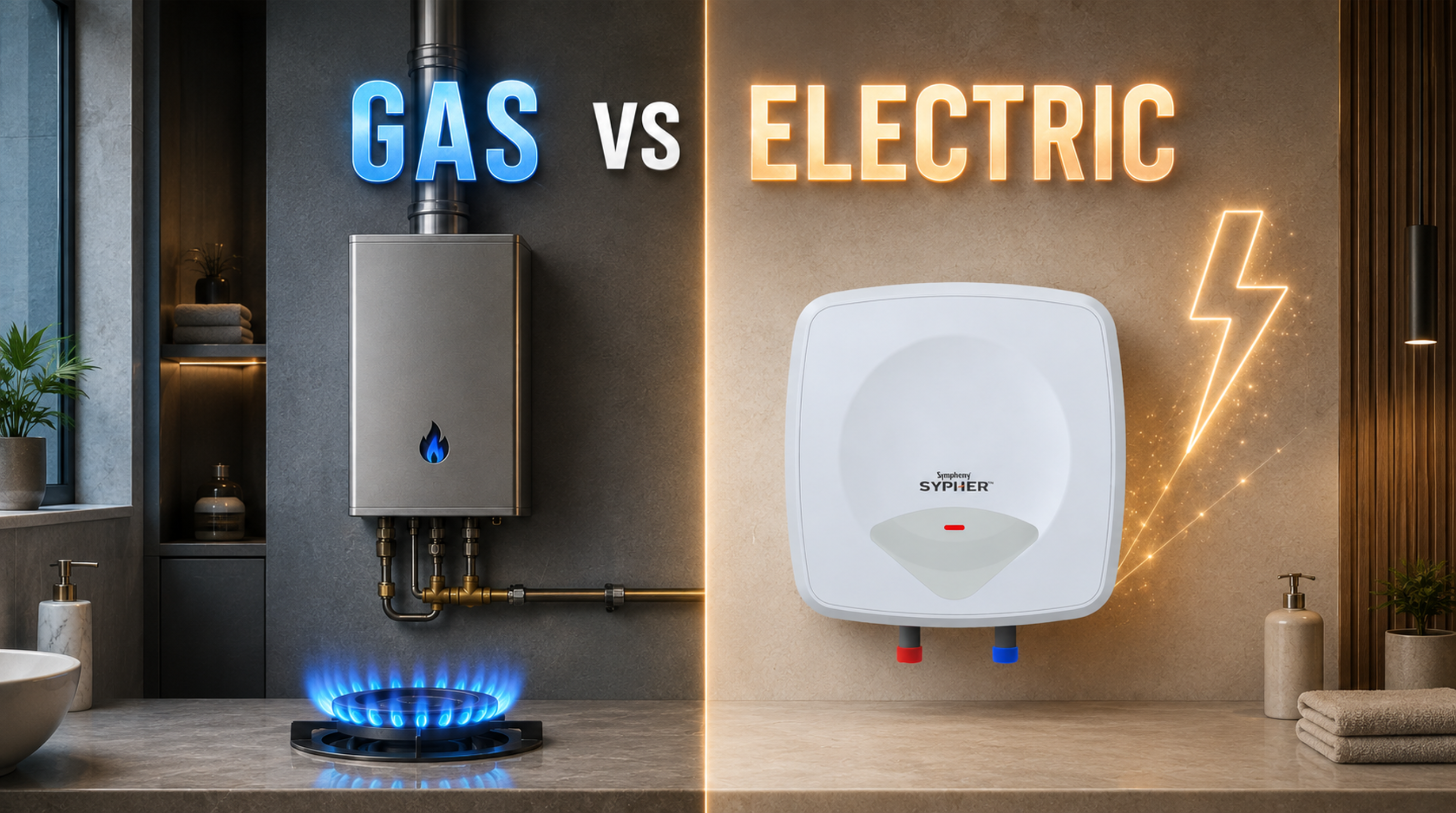
Gas vs Electric Geyser:
Hot water is a daily necessity, and as winter sets in, more households across India start searching for the right water heater. One of the most common questions buyers ask is: gas water heater or electric water heater – which is better? This article compares both types across cost, safety, installation, maintenance, and everyday convenience, and explains why an electric geyser is the smarter, safer choice for most Indian homes today.
Gas vs Electric Water Heater: Understanding the Basics
When it comes to heating water at home, there are two commonly discussed technologies, gas water heaters and electric water heaters. While gas geysers were once popular in certain regions for their quick heating, electric geysers have become the preferred choice for the vast majority of Indian households, thanks to advances in heating technology, safety engineering, and energy efficiency.
Let’s break down how each one works before comparing them directly.
What Is a Gas Water Heater?
A gas water heater uses LPG or piped natural gas to heat water, typically through a burner installed beneath or beside the water tank or flow chamber. Gas geysers can heat water relatively quickly, but they come with significant caveats, they require a continuous gas supply, proper ventilation, and careful installation to avoid the risk of gas leaks or carbon monoxide buildup, which makes them a less practical and less safe option for enclosed indoor bathrooms, especially in apartments and high-rise buildings.
What Is an Electric Water Heater?
An electric water heater commonly known as a geyser uses an electric heating element to warm water, either instantly (instant geyser) or by heating and storing a larger volume in an insulated tank (storage geyser). Electric geysers only need a standard power connection, making them far easier and safer to install in any bathroom, kitchen, or utility area, without the risks associated with gas lines or open flames indoors.
Gas vs Electric Water Heater: Detailed Comparison
| Factor | Gas Water Heater | Electric Water Heater |
| Installation | Needs gas connection & ventilation | Simple electrical connection |
| Safety | Risk of gas leaks, needs open ventilation | No combustion risk, shock-proof designs available |
| Indoor Use | Not recommended in closed bathrooms | Safe for closed bathrooms and kitchens |
| Maintenance | Regular gas line and burner checks | Minimal maintenance, longer service intervals |
| Running Cost | Depends on LPG/PNG price fluctuations | Predictable, often lower with 5-star rated models |
| Upfront Cost | Generally higher (unit + gas fitting) | Widely available at competitive prices |
| Suitability for High-Rises | Ventilation and gas access are major concerns | Ideal, especially with pressure-rated models |
| Ease of Use | Requires monitoring flame/gas supply | Simple thermostat and smart controls |
| Availability of Advanced Features | Limited smart features | AI monitoring, filtration, LED displays, timers |
Why Electric Water Heaters Are the Safer Choice?
Safety is the single biggest reason Indian households are moving away from gas geysers and toward electric water heaters. Gas geysers installed in small, poorly ventilated bathrooms have historically been linked to carbon monoxide poisoning risks, which is a serious concern in sealed, modern apartment bathrooms that often lack adequate airflow. Electric geysers eliminate this risk entirely, since there’s no combustion involved only an electric heating element working within a sealed, insulated tank or flow chamber.
Modern electric geysers also come with multiple built-in safety layers that gas water heaters simply cannot match:
- Shock-proof body to prevent electrical hazards
- Automatic thermostat cut-off to avoid overheating
- Dry heating protection for the heating element
- Pressure-rated tanks for safe use in high-rise buildings
- Child lock features for households with young children
For a bathroom appliance used daily by every family member, this level of built-in safety makes electric water heaters the far more dependable option.
Why Electric Water Heaters Are More Convenient?
Beyond safety, electric geysers simply fit better into how Indian homes are built and used today:
- No gas connection required – just plug into a standard power point, making installation quick and hassle-free, even in rented homes or apartments without piped gas.
- Works in any bathroom layout – no need for external ventilation or flue pipes, so electric geysers can be installed in compact, windowless bathrooms common in Indian apartments.
- Smart features – many electric geysers now come with digital temperature displays, timers, and AI-powered monitoring, which are simply not available on gas water heaters.
- Consistent performance – electric storage geysers keep water hot and ready over long periods thanks to strong insulation, without depending on gas pressure or supply fluctuations.
- Suitable for high-rise living – with the right pressure rating, electric geysers work seamlessly with pressure pumps, something gas systems struggle with in multi-storey buildings.
Running Costs: Is Electric Really More Economical?
A common assumption is that gas heats water more “cheaply,” but this isn’t always true once you factor in the full picture. Gas prices fluctuate, and gas water heaters need regular servicing of burners and gas lines to run safely and efficiently – costs that add up over time. Electric geysers, especially those with a 5-star energy rating and good insulation (such as PUF insulation), heat water efficiently and retain heat for longer, which means less repeated heating and a more predictable monthly electricity cost. Over the lifetime of the appliance, a well-insulated, energy-efficient electric geyser is typically a more economical and lower-maintenance choice than a gas water heater.
Maintenance: Electric Geysers Are Simpler to Live With
Gas water heaters require periodic checks of the burner, gas line fittings, and ventilation systems to remain safe – a responsibility many households either forget or delay, which increases risk over time. Electric geysers, by comparison, need far less hands-on maintenance. With features like anode rods to prevent corrosion, glass-coated tanks, and automatic safety cut-offs, today’s electric water heaters are built to run reliably for years with minimal intervention – an important factor for busy households heading into winter, when hot water is needed every single day.
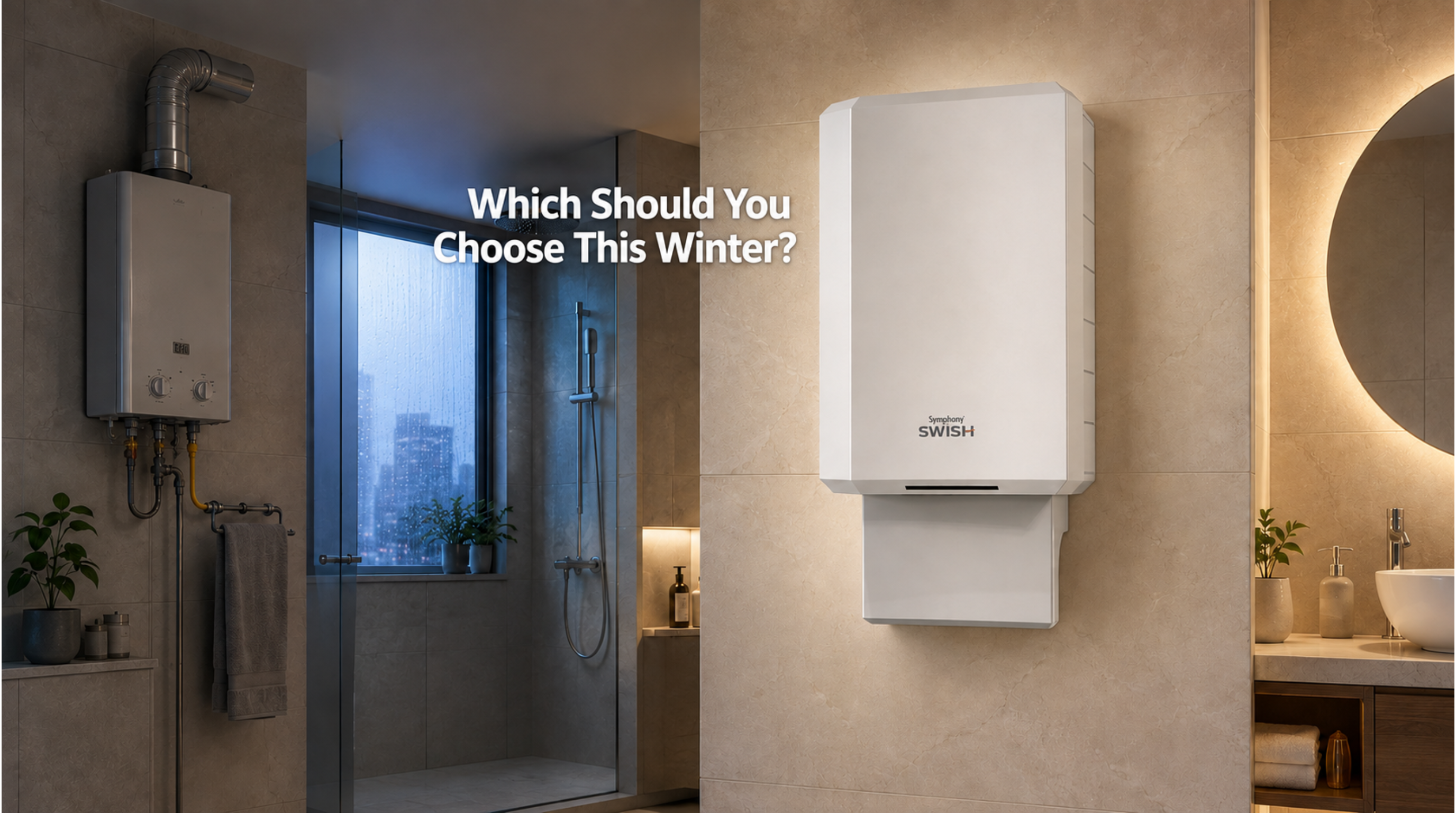
So, Which Should You Choose This Winter?
If you’re comparing gas vs electric water heaters ahead of winter, the decision becomes fairly clear once you weigh safety, convenience, and running costs together. Gas water heaters demand specific infrastructure – a gas connection, proper ventilation, and ongoing maintenance – that simply doesn’t suit most modern Indian homes, especially apartments and high-rise flats. Electric water heaters, on the other hand, install easily, run safely in any bathroom, and now come packed with smart, energy-efficient features that make daily hot water use simple and worry-free.
For nearly every household – whether you live alone, with a small family, or in a high-rise building an electric geyser is the smarter, safer, and more future-ready choice.
Best Geyser for Winter: Symphony Electric Water Heaters
Symphony Limited, a globally trusted name in home comfort appliances, specialises in electric water heaters engineered specifically for the safety, water quality, and space needs of Indian homes. Symphony’s electric geyser range includes:
- Symphony Swish – a compact instant electric geyser for quick, everyday hot water needs, ideal for kitchens and smaller bathrooms.
- Symphony Spa – a premium electric storage geyser (10L/15L/25L) with 9-layer PuroPod filtration and a smart bath controller for a luxurious, hair-friendly bathing experience.
- Symphony Sauna – an electric storage geyser built for high-rise buildings, with 8-bar pressure capacity and a glass-coated Incoloy heating element for long-term durability.
- Symphony Soul – an electric storage geyser with an LED temperature display and a Titanium PRO Glassline-coated tank for added longevity.
- Symphony Soul HL – a horizontally designed electric storage water heater for space-saving installation.
- Symphony Selesta and Symphony Sypher – dependable, everyday electric storage geysers with adjustable temperature control.
Every Symphony electric water heater comes with a 5-star energy rating, an AI-powered smart control panel with anti-burn child lock and timer function, and industry-leading warranty coverage – 7 years on the inner tank, 3 years on the heating element, and 2 years on the overall product, backed by free installation support.
Skip the risks and hassle of gas – explore Symphony’s electric geyser range and get your home winter-ready with safe, efficient, and reliable hot water.
Frequently Asked Questions (FAQs)
Which is better — gas or electric water heater?
Electric water heaters are generally safer, easier to install, and better suited to Indian homes, especially apartments and high-rise buildings, since they don't require gas connections or ventilation.
Are gas water heaters safe to use indoors?
Gas geysers carry a risk of gas leaks and carbon monoxide buildup if not properly ventilated, which makes them less suitable for small, enclosed bathrooms. Electric geysers avoid this risk entirely since there's no combustion involved.
Is an electric geyser more expensive to run than a gas one?
Not necessarily. A 5-star rated electric geyser with good insulation offers predictable running costs and lower maintenance compared to a gas water heater, which depends on fluctuating LPG/PNG prices and regular servicing.
Can electric water heaters be used in high-rise buildings?
Yes. Electric storage geysers with an appropriate pressure rating, such as an 8-bar capacity, work well with pressure pumps in high-rise buildings — something gas systems often struggle with.
Do electric geysers need less maintenance than gas heaters?
Yes. Gas water heaters require regular checks of the burner and gas lines, while electric geysers with anode rods and corrosion-resistant tanks typically need minimal upkeep.
What safety features should I look for in an electric water heater?
Look for a shock-proof body, automatic thermostat cut-off, dry heating protection, pressure rating, and child lock — all standard on Symphony's electric geyser range.
Does Symphony sell gas water heaters?
No, Symphony specialises exclusively in electric water heaters, offering both instant and storage geyser models designed for safety, energy efficiency, and durability.
Which Symphony electric geyser is best for winter?
For consistent hot water across the household, Symphony's storage range — Spa, Sauna, Soul, Selesta, and Sypher is recommended. For quick, single-point hot water needs, the Symphony Swish instant geyser is a compact and efficient choice.
What warranty does Symphony offer on its electric water heaters?
Symphony offers a 7-year warranty on the inner tank, 3 years on the heating element, and a 2-year comprehensive product warranty.
Are electric geysers suitable for hard water areas?
Yes, provided they have built-in filtration and anti-scaling features. Symphony's PuroPod filtration and Titanium PRO Glassline-coated tanks help protect the appliance from hard water damage while also protecting hair and skin.