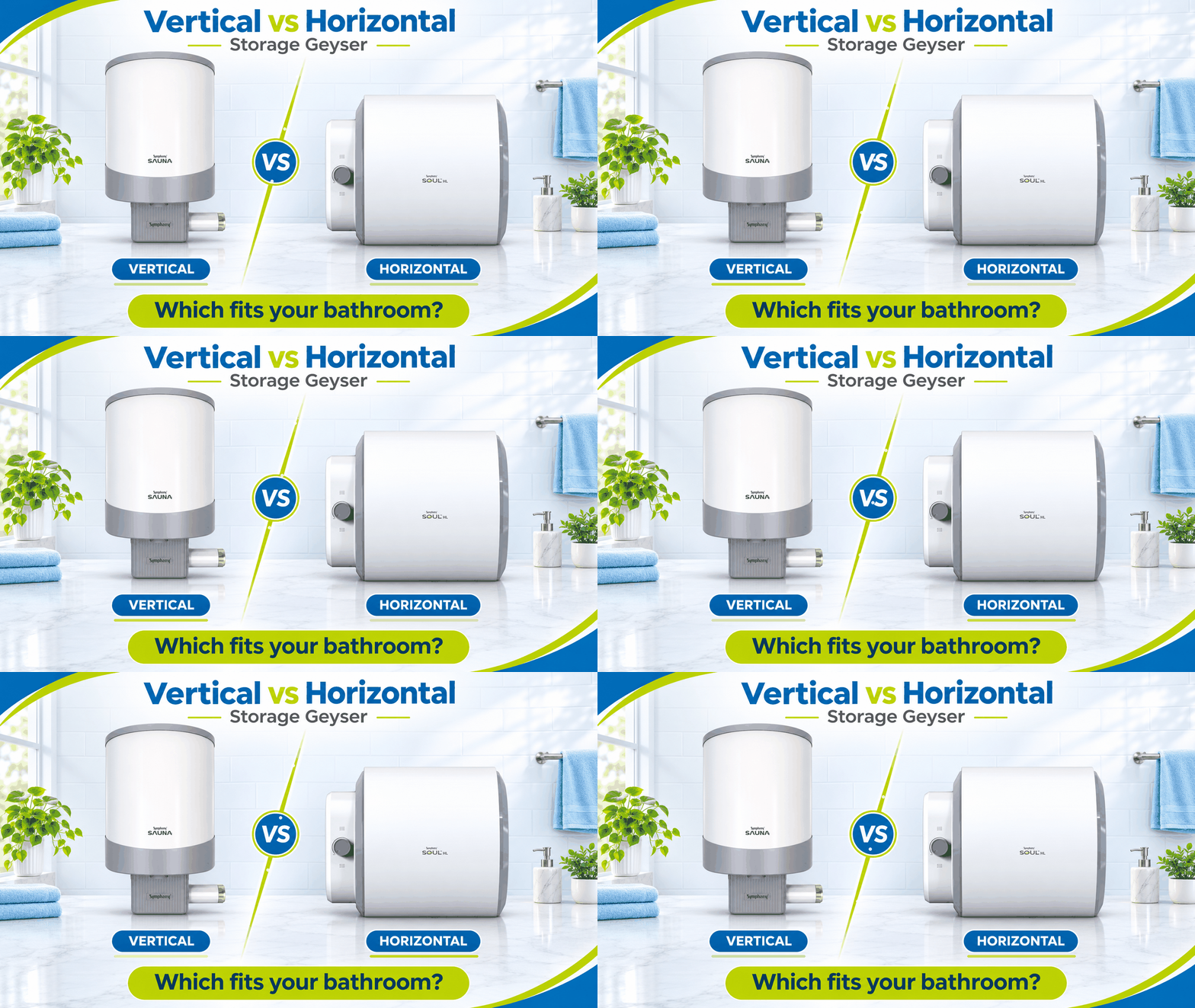
Quick test. Stand in your bathroom and look up. How much empty wall do you see above the door, and how wide is the wall beside the window?
Those two numbers decide more about your next storage geyser than any brochure will. Let’s work out which shape suits your bathroom.
What’s Inside a Storage Water Heater?
Every storage water heater works on the same idea. Cold water enters the tank, a heating element warms it, a thermostat holds the temperature, and hot water leaves through the outlet when you open the tap.
So if the inside is the same, why does shape matter? Because the tank’s shape changes where it fits on your wall, and how the hot and cold water behave inside it.
Vertical Storage Geyser: Tall and Slim
A vertical geyser stands upright, like a cylinder or a slim box. It takes little width but needs height.
How it behaves: hot water naturally rises, so it sits at the top where the outlet draws from, while incoming cold water settles at the bottom. This layering is why vertical tanks tend to hold their temperature well as you use the water.
Where it shines- Narrow walls
- Bathrooms with good ceiling height
- Everyday family use
Watch out for
- Low ceilings or tight space above a door or window
- Enough room for pipes and connections at the base
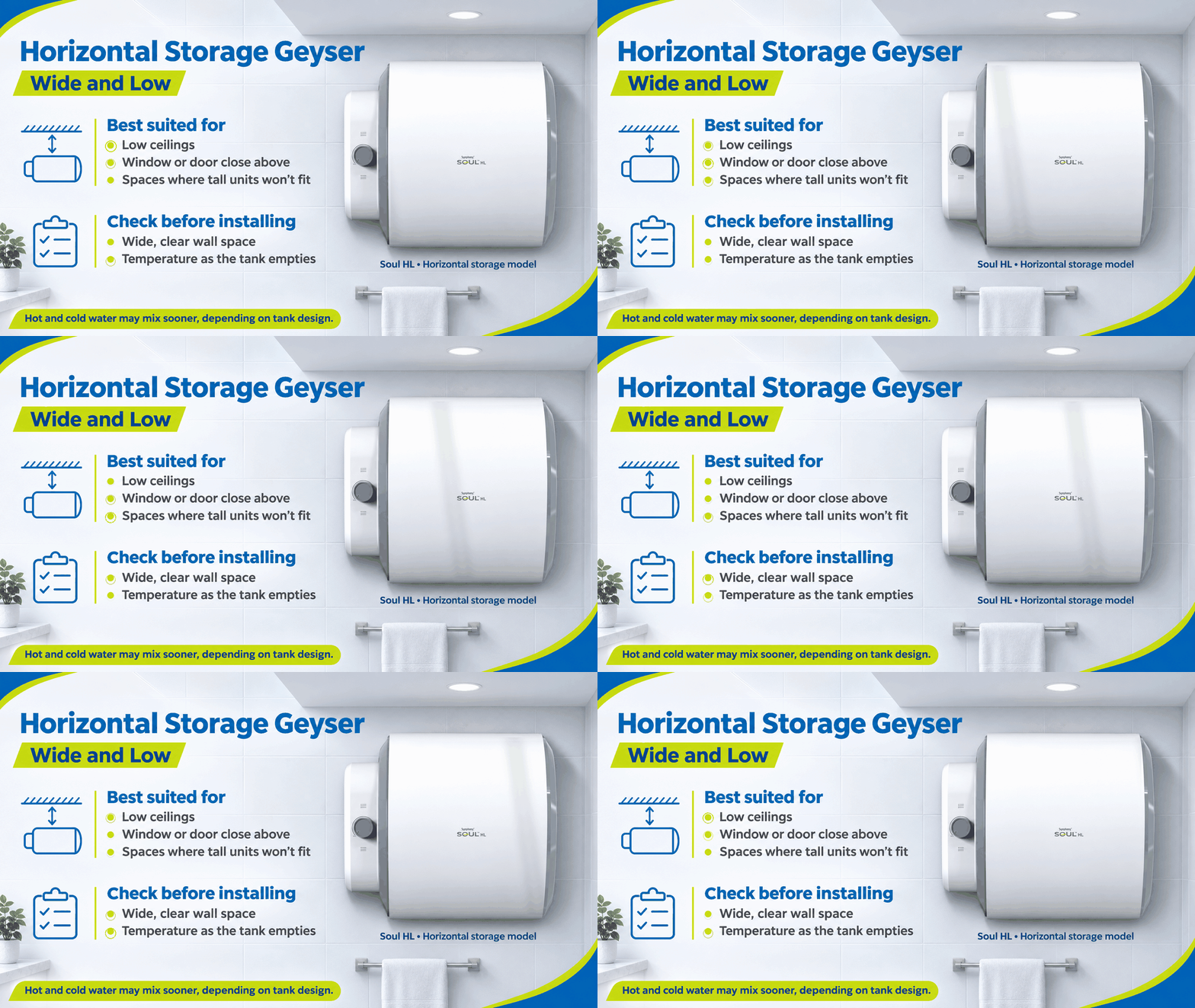
Horizontal Storage Geyser: Wide and Low
A horizontal geyser lies lengthwise on the wall. It needs width but very little height.
How it behaves: the tank is shallower from top to bottom, so there is less height for hot and cold water to separate. Depending on the tank design, they may mix a little sooner, so the water temperature can start dropping earlier as the tank empties.
Where it shines
- Low ceilings
- Walls with a window or door close above
- Bathrooms where a tall unit simply won’t fit
Watch out for
- A wide, clear stretch of wall
- Checking how the model holds its temperature as the tank empties
Symphony makes both shapes. Its Sypher and Selesta storage geysers mount vertically, while the Soul HL is a horizontal storage model designed for space-saving installation.
Vertical vs Horizontal Geyser at a Glance
| Vertical | Horizontal | |
| Needs most | Wall height | Wall width |
| Suits | Narrow walls, good ceiling height | Low ceilings, short vertical gaps |
| Hot water layering | Tends to layer well | May mix earlier, depending on design |
| Typical worry | Not enough clearance above | Not enough clear wall width |
Your Three-Minute Bathroom Check
Grab a tape measure and a phone for notes.
- Measure free height from the spot where the unit’s base would sit to the ceiling, or to the nearest door or window frame.
- Measure free width on the same wall.
- Note where the pipes and socket are. Moving them adds effort.
- Mark the splash zone. Keep the unit away from direct shower spray.
- Compare your numbers with the dimensions on each product page, including the space needed for the bracket and connections.
A geyser that looks right in a photo but not on your wall is an expensive lesson.
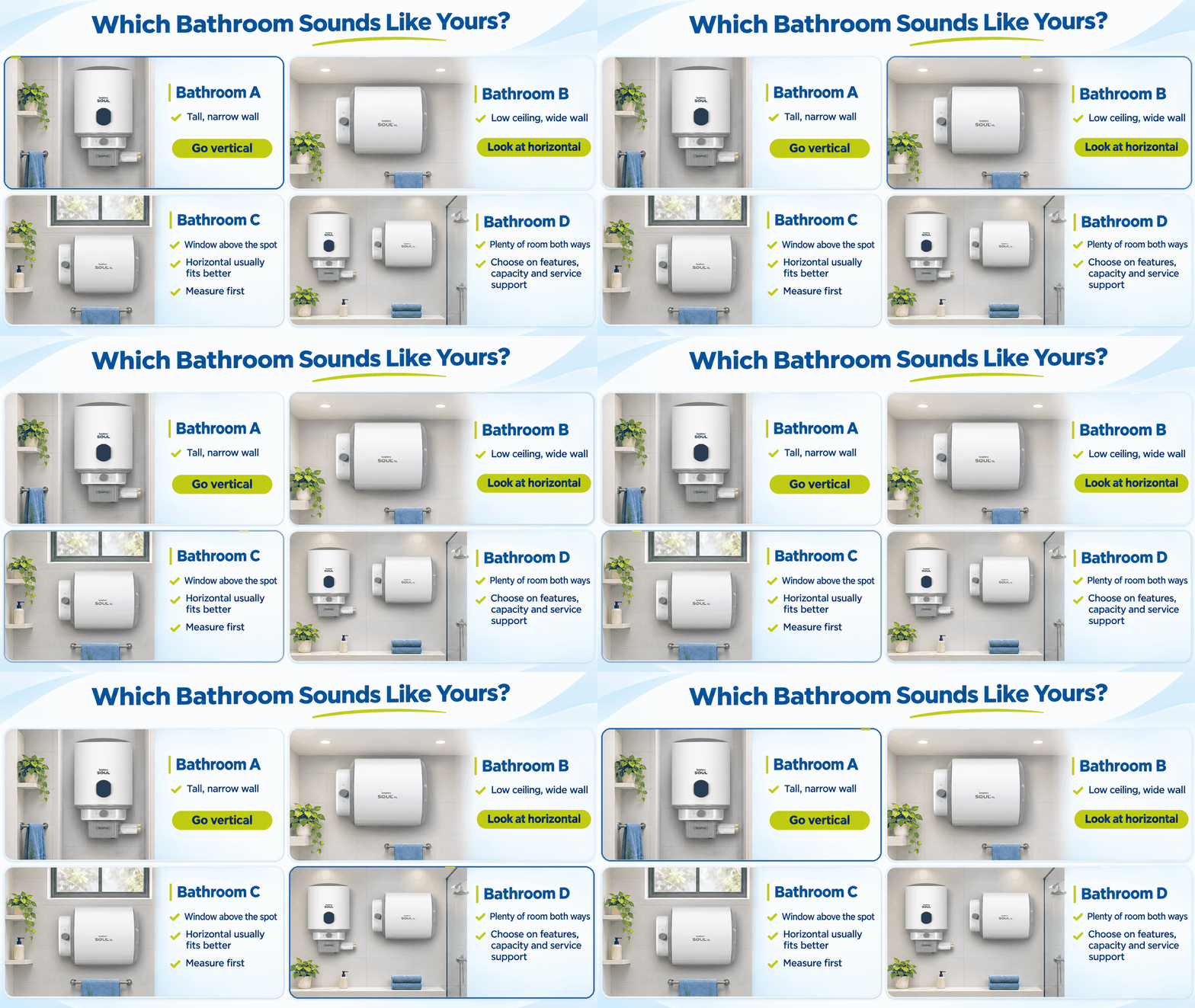
Which Bathroom Sounds Like Yours?
Bathroom A: a tall, narrow wall.
Go vertical.
Bathroom B: a low ceiling, but a wide wall.
Look at horizontal.
Bathroom C: a window just above the spot.
Horizontal usually fits better. Measure first.
Bathroom D: plenty of room both ways.
Choose on features, capacity and service support, not shape.
The Honest Bit: Shape Is Only One Part of the Decision
Let’s be fair. Neither shape is automatically better.
- A horizontal unit isn’t a poor choice. It’s the right choice when height is the problem.
- A vertical unit isn’t always ideal. It can’t help if the ceiling is too low.
- Shape won’t fix the wrong capacity or ignore hard water. Those matter just as much.
Also, a full tank is heavy. Check that your wall can safely carry it, and have a qualified electrician and plumber handle the installation.
Leave Room to Reach It
Here’s a detail people forget until the geyser needs attention. A storage water heater needs servicing now and then, especially in hard water areas where scale can build up inside.
So leave enough space to reach the connections, the thermostat and the mounting. A tight fit that looks neat on day one can turn into a headache when a technician can’t get at the unit.
A simple rule: measure the geyser, then add comfortable working room around it.
What to Compare After the Shape
Once the unit fits, look at:
- Tank protection, such as glass-lined or titanium-coated tanks
- A magnesium anode rod for corrosion resistance
- Energy rating, such as 5 star
- Safety protections against overheating and pressure
- Pressure rating suited to your building
- Water quality handling, if your water is hard
For hard water areas, Symphony’s Spa, Sauna and Soul storage geysers include its 9-layer PUROPOD cartridge, which conditions water as it heats. It supports a gentler bathing routine and isn’t a medical treatment.
Questions You Might Be Wondering About
What is the main difference between a vertical and a horizontal storage geyser?
Shape and space. A vertical unit needs wall height, while a horizontal unit needs wall width.
Who should choose a horizontal geyser?
People with low ceilings or a window or door close above the spot where a tall unit would go.
When is a vertical geyser the better fit?
When the wall is narrow and the ceiling height is generous.
Where should a storage geyser be installed in a bathroom?
Near where the hot water is used, out of the direct splash zone, on a wall that can carry the weight, with installation by qualified professionals.
How do I measure for a geyser?
Measure free height and width, note pipe and socket positions, and compare them with each model's listed dimensions.
How does a vertical tank hold its temperature?
Hot water rises to the top where the outlet draws from, while colder water stays at the bottom, so layering helps it stay hot for longer.
Which is better for hard water, vertical or horizontal?
Neither shape solves hard water. Look at tank protection and whether the model conditions water as it heats.
Can I use a horizontal water heater in a small bathroom?
Yes, if you have a clear stretch of wall. Check the model's dimensions and mounting needs first.