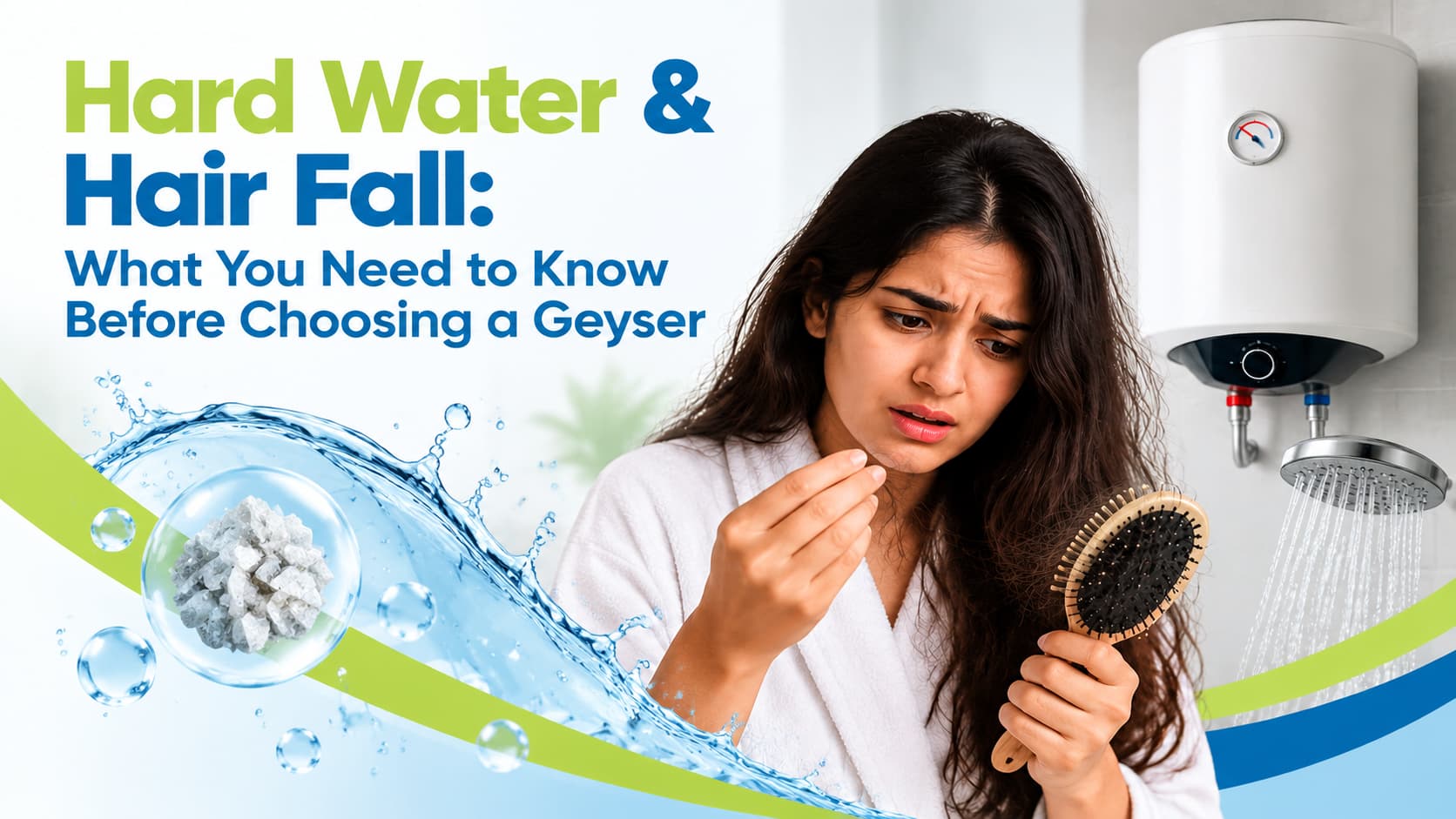
You changed your shampoo. Tried a new serum. Started oiling more regularly.
But what if the problem isn’t only what you’re putting on your hair? What if you should also be looking at what your hair is being washed with?
For many Indian households, the answer could be sitting right there in the bathroom: hard water.
Think about your bathroom for a second.
Do you notice:
- White deposits around your taps?
- Soap that refuses to lather properly?
- Hair that feels rough or stiff after a wash?
- Skin that feels unusually dry?
- Scale building up around your shower or fixtures?
If you answered yes to even one or two, hard water could be worth looking into.
Hard water contains dissolved minerals, particularly calcium and magnesium. As groundwater moves through soil and rock – and as water travels through pipelines – it can pick up these minerals before eventually reaching your tap.
And here’s the tricky part:
Hard water doesn’t announce itself.
There may be no unusual smell.
No obvious colour.
No warning label.
Sometimes, you simply notice the effects.
“But I already use good hair-care products…”
That’s exactly the point.
We spend a lot of time thinking about what goes onto our hair:
Shampoo → Conditioner → Serum → Oil → Mask
But how often do we think about what comes before all of that?
Water.
If hard water is contributing to dryness, residue or roughness, your shampoo and serum are working after your hair has already come into contact with that water.
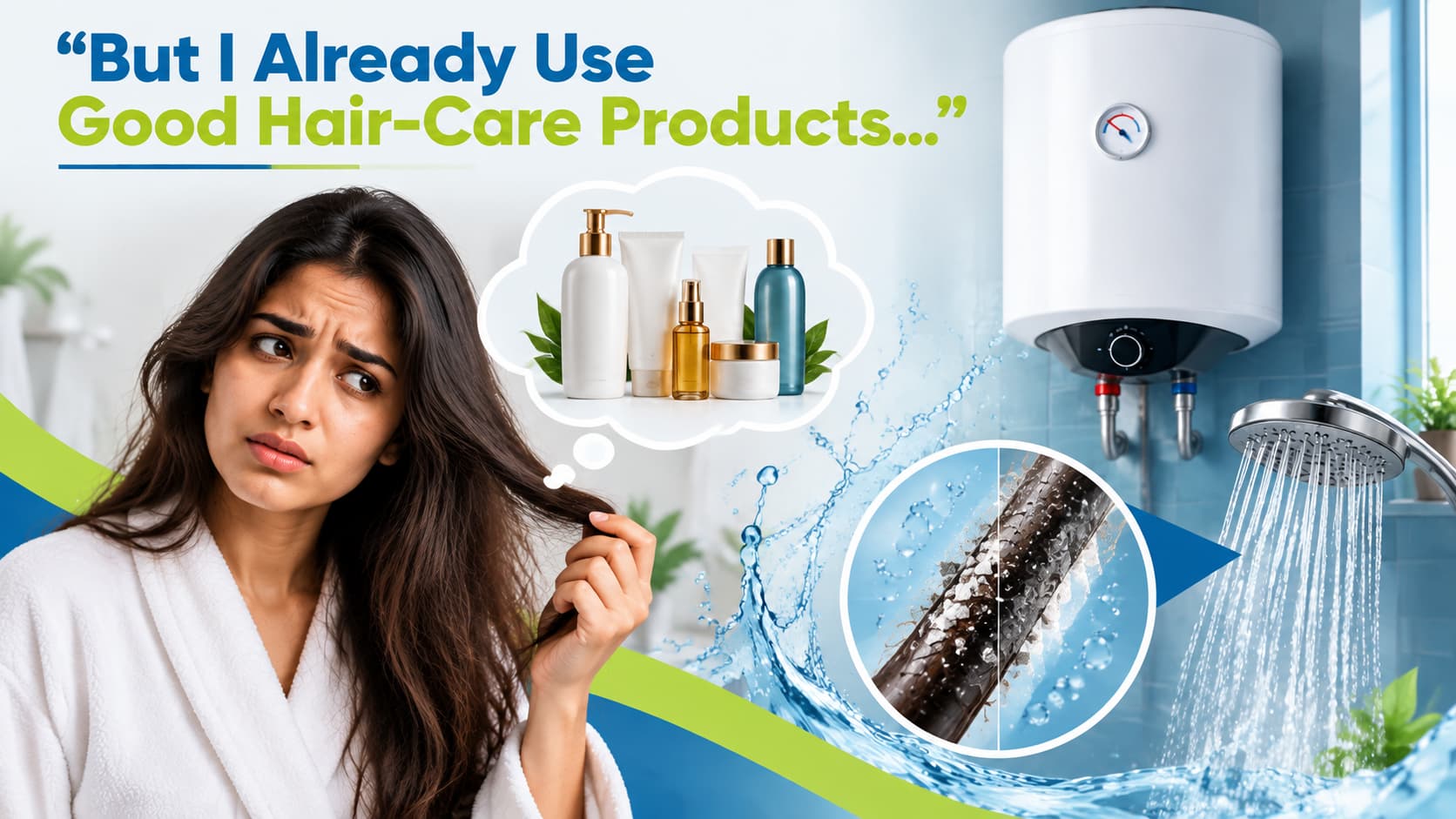
So while a product may make your hair feel smoother or more manageable, it doesn’t change the water coming from your tap.
And tomorrow?
You’re washing your hair with that same water again.
It simply means that if hard water is part of the problem, the water itself deserves attention too.
Let’s clear up an important point.
Hair fall has many possible causes – genetics, hormones, nutrition, stress, scalp conditions and several other factors can play a role.
So, no, hard water isn’t a universal explanation for hair fall.
But hard water can contribute to dryness, roughness, mineral residue and breakage, which can make hair feel weaker and more difficult to manage.
So ask yourself:
Could the water you’re using every day be one part of the picture? If the answer is possibly, there’s a practical place to start looking.
Now let’s talk about your geyser
Here’s something most people don’t really think about:
A regular geyser heats water. That’s its job.
Water goes in.
It gets heated.
It comes out.
But the minerals and other substances already present in that water?
Heating the water doesn’t magically make them disappear.
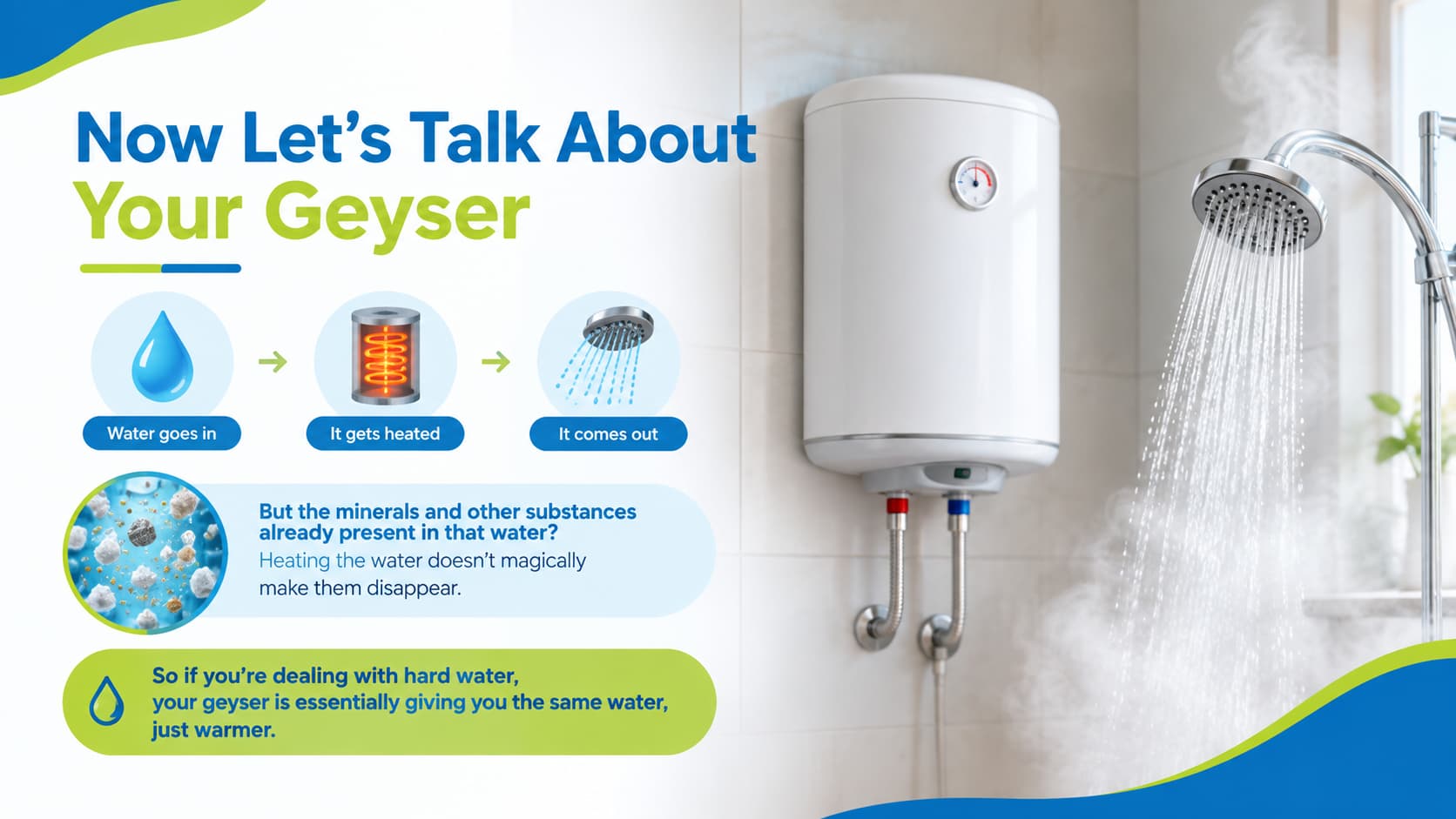
So if you’re dealing with hard water, your geyser is essentially giving you the same water, just warmer.
What if your geyser could do more?
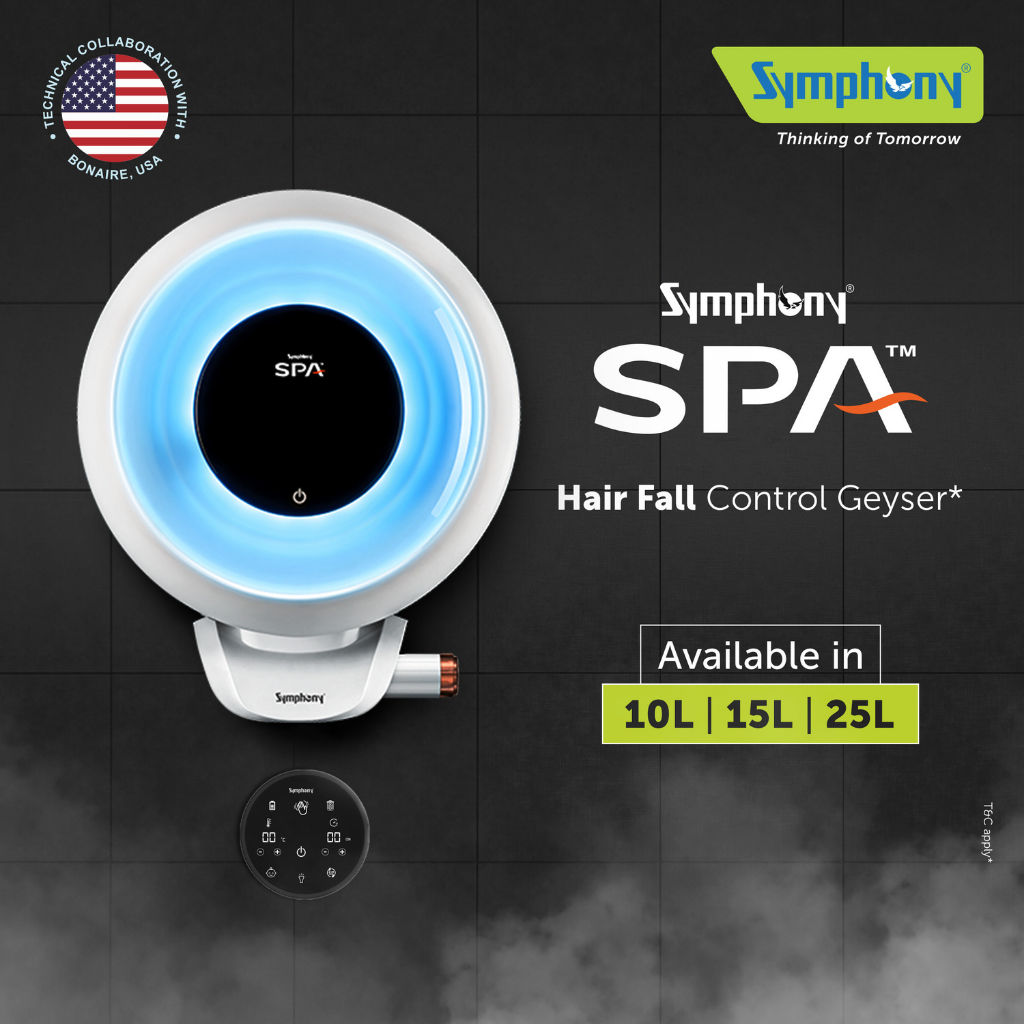
This is where Symphony’s Hair Fall Control Geyser range comes in.
The range – Spa, Sauna and Soul – incorporates PUROPOD, a 9-layer cartridge designed to condition the water as it passes through the geyser.
So instead of:
Water → Heat → Shower
the experience becomes:
Water → PUROPOD → Heat → Shower
The idea is simple:
Treat the water before it reaches your hair and skin.
PUROPOD is designed to filter sediments and certain chemicals and condition the water as it is heated. That means you’re not adding another bottle to your bathroom shelf. You’re changing the water itself before it becomes part of your hair-washing routine.
Regular Geyser vs Hair Fall Control Geyser
Let’s make it really simple.
| Regular Geyser | Symphony Hair Fall Control Geyser | |
| Heats water | ✅ | ✅ |
| Designed to condition water | ❌ | ✅ |
| PUROPOD 9-layer cartridge | ❌ | ✅ |
| Addresses hard-water-related concerns | ❌ | Designed to help |
| Treatment happens within the geyser | ❌ | ✅ |
A regular geyser heats.
Symphony’s Hair Fall Control range heats + conditions.
But here’s the honest bit…
A Hair Fall Control Geyser isn’t a medical treatment for hair fall. And it shouldn’t be presented as one.
Hair fall can have many causes, and treating water won’t address all of them.
What this approach focuses on is much more specific: The hard-water part of the problem.
If hard water is contributing to dryness, roughness or breakage, reducing that exposure can be one meaningful part of a broader hair-care routine.
Think of it as:
Not the whole solution.
But potentially one missing piece.
Try this: Your 30-second Hard Water Check
Before you blame your shampoo, give your bathroom a quick inspection.
How many of these do you notice?
- White scale around your taps
- Soap doesn’t lather easily
- Water leaves deposits on fixtures
- Hair feels rough after washing
- Hair feels dull or stiff
- Skin feels dry after bathing
0–1 checked? Hard water may not be your biggest concern.
2–3 checked? It could be worth investigating your water quality.
4+ checked? Your water deserves a closer look.
This isn’t a diagnostic test, of course. The most reliable way to know your water hardness is to have the water tested.
FAQs
Can hard water actually cause hair fall?
Hard water is better understood as one possible environmental contributor, rather than a universal cause of hair fall.
It can contribute to mineral residue, dryness, roughness and breakage. Hair fall itself can have many other causes.
How do I know whether my water is hard?
Look for clues such as poor soap lathering, white deposits on taps and fixtures, and hair or skin that feels unusually dry after washing.
For certainty, test your water hardness rather than relying only on these signs.
Can I just change my shampoo?
You can - and the right hair-care products may certainly help with how your hair feels.
But shampoo doesn't change the composition of the water you're washing with. So if hard water is contributing to the issue, the underlying exposure remains.
Where does PUROPOD fit into the geyser?
PUROPOD is integrated into the geyser as a 9-layer cartridge.
Water passes through it as part of the heating process, so conditioning happens inside the appliance rather than requiring a separate post-installation device.
Will I see a difference after one wash?
Don't think of it as an overnight transformation.
The effects of repeated exposure to hard water can build over time, so changing the water you're exposed to is also a longer-term approach.
It's about changing the routine - not expecting a one-wash miracle.
Does hard water affect my scalp too?
Repeated exposure to hard water can leave the scalp feeling dry or uncomfortable for some people.
However, scalp symptoms can have many causes, so persistent or significant scalp problems should not automatically be attributed to water quality.
When was the last time you checked what was actually in your bathing water?
Maybe that's the first thing worth checking before you buy your next bottle of serum.
So… should you be looking at your geyser differently?
Maybe.
Because we usually ask: “Which geyser should I buy?”
Perhaps the more useful question is: “What should my geyser do to the water before I use it?”
If your water is hard, simply heating it doesn’t address the minerals already present.
That’s the thinking behind Symphony’s Hair Fall Control Geyser range.
With PUROPOD’s 9-layer cartridge, the Spa, Sauna and Soul models are designed to condition the water as it is heated, helping address hard-water-related concerns at the source.
Because sometimes, better hair care isn’t only about finding another product for your hair.
It can start with looking at the water.
Your shampoo matters.
Your routine matters.
And if you have hard water, your water matters too.